Erste-Hilfe-Kurse für Senioren – kompakt erklärt
Interesse an unseren Dienstleistungen?
Bleiben Sie informiert – völlig kostenlos! Tragen Sie einfach Ihren Namen und Ihre E-Mail-Adresse ein. Sobald unser Service startet, erhalten Sie sofort eine Benachrichtigung – selbstverständlich kostenfrei. Als Dankeschön sichern Sie sich zusätzlich einen exklusiven Willkommens-Bonus, den nur unsere Frühinteressenten bekommen.
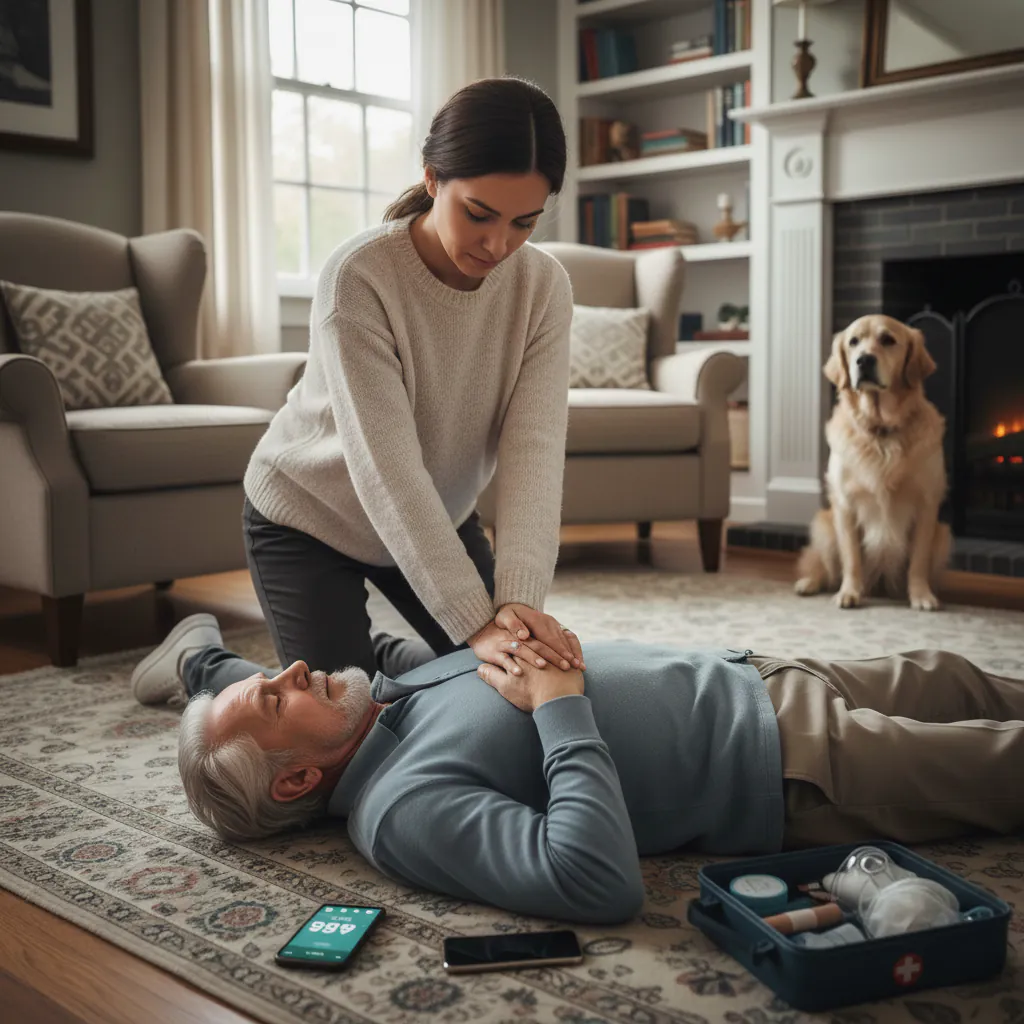
Erste Hilfe speziell für Seniorinnen und Senioren – sicher handeln, wenn es darauf ankommt
Auch wenn die Grundlagen der Ersten Hilfe immer gleich bleiben, verändern sich mit zunehmendem Alter die Risiken und typischen Notfallsituationen. Ältere Menschen sind häufiger von Herz-Kreislauf-Problemen, Stürzen, Schluckstörungen oder plötzlich auftretenden Schmerzen betroffen. Unser Kurs legt den Schwerpunkt genau auf diese Situationen und vermittelt Ihnen Schritt für Schritt, wie Sie in solchen Momenten ruhig, klar und wirksam reagieren können. Sie erfahren, wie Sie Warnsignale schneller erkennen, welche Maßnahmen bei Senioren besonders wichtig sind und wie Sie typische Fehler vermeiden, die im Ernstfall wertvolle Zeit kosten könnten. Unser Ziel ist es, Ihnen nicht nur Kenntnisse, sondern echte Sicherheit an die Hand zu geben – damit Sie in kritischen Situationen ohne Zögern helfen können.
Dieser Kurs wurde bewusst so gestaltet, dass er sowohl Angehörige als auch Betreuungskräfte unterstützt. Er zeigt, worauf es im Alltag älterer Menschen ankommt, welche Besonderheiten Sie beachten sollten und wie Sie mit einfachen Handgriffen und klaren Abläufen Leben retten oder schwere Folgen verhindern können. So sind Sie für die häufigsten Notfälle im Seniorenalter bestens vorbereitet – ein beruhigendes Gefühl für alle Beteiligten.
Erste Hilfe: Wissen, das Leben retten kann
Typische Notfälle im Alter
Stürze sicher erkennen
Tipp: Viele Verletzungen entstehen durch unbeobachtete Stürze.
Lösung: Bei jedem Sturz zuerst Atmung prüfen, dann vorsichtig ansprechbar machen und nur bewegen, wenn keine Schmerzen bestehen.
Stabiler Seitenlage vertrauen
Tipp: Bewusstlose, aber atmende Personen brauchen eine sichere Position.
Lösung: In die stabile Seitenlage bringen, um die Atemwege freizuhalten und Erstickungsgefahr zu verhindern.
Medikamente richtig einschätzen
Tipp: Viele Senioren nehmen mehrere Medikamente ein – Notfälle können dadurch komplexer sein.
Lösung: Medikamentenliste bereithalten, im Ernstfall dem Rettungsdienst zeigen und niemals zusätzliche Arzneien ohne Anleitung verabreichen.
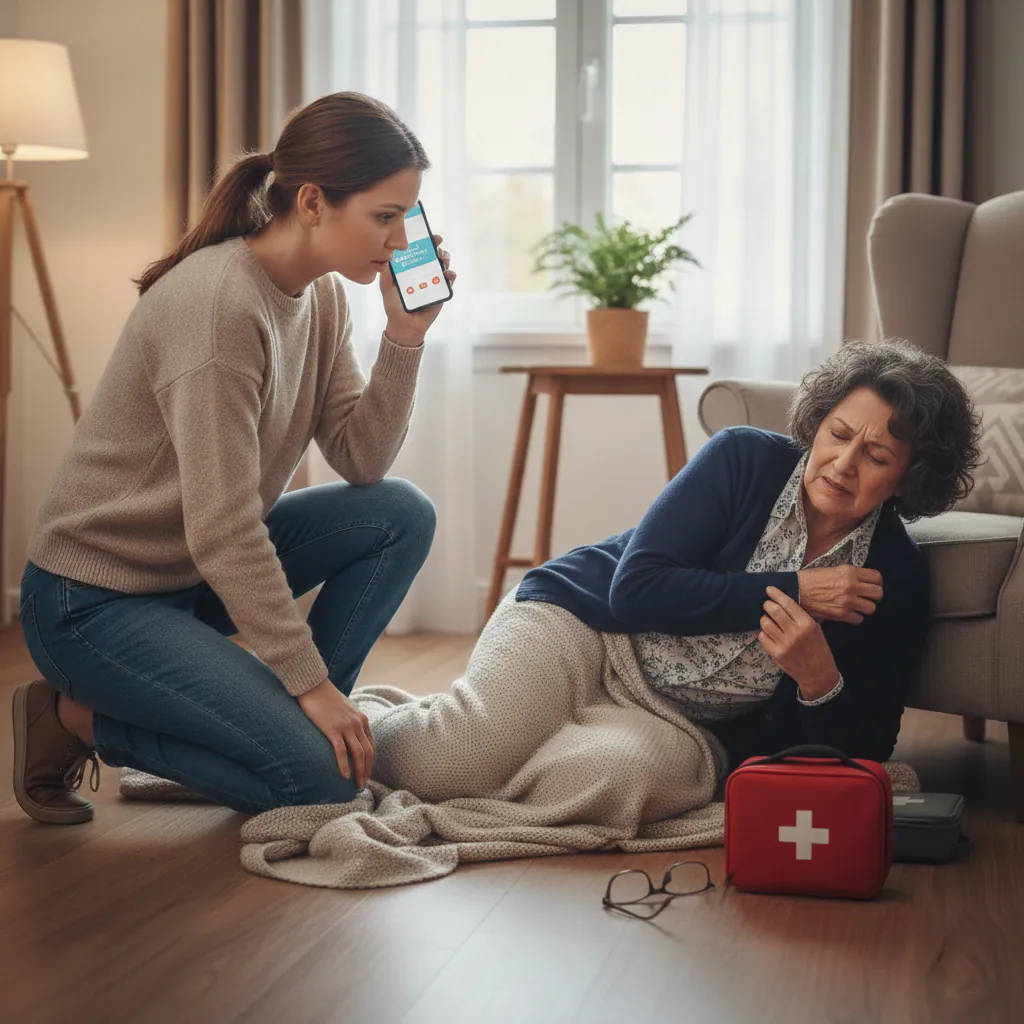
Herzinfarkt schnell erkennen
Tipp: Plötzliche Brustschmerzen sind bei Senioren ein häufiger lebensbedrohlicher Notfall.
Lösung: Betroffene hinsetzen lassen, beruhigen, Atmung beobachten und sofort 112 rufen. Keine körperliche Anstrengung zulassen.
Sturz mit möglichem Hüftbruch
Tipp: Hüftfrakturen entstehen häufig bei Stürzen und sind sehr schmerzhaft.
Lösung: Person nicht bewegen, wärmen, beruhigen, Beine in Schonhaltung belassen und den Notruf absetzen. Nur bei Gefahr (z. B. Straße) vorsichtig sichern.
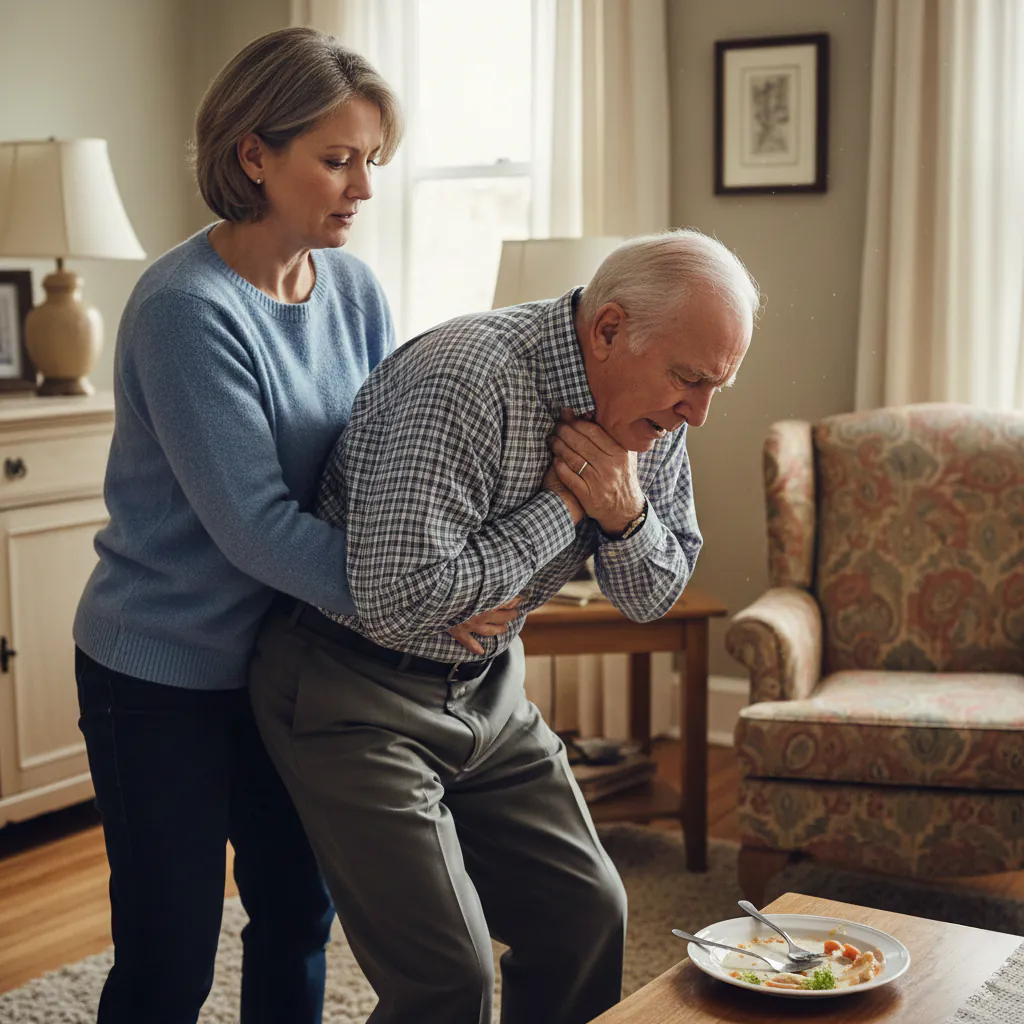
Schluckstörung / Verschlucken – Heimlich-Handgriff
Tipp: Bei Verschlucken droht schnelle Atemnot.
Lösung: Wenn keine Atmung möglich ist, 5 kräftige Schläge zwischen die Schulterblätter, danach Heimlich-Handgriff (Oberbauchkompressionen) anwenden und 112 rufen. Bei Bewusstsein immer rückmelden lassen, ob Luft kommt.
Bitte beachten Sie:
Unsere Hinweise sollen Ihnen eine Orientierung geben, sind jedoch ohne Gewähr und ohne Haftungsanspruch. Im Notfall immer professionelle Hilfe rufen.
Häufig gestellte Fragen
Hier finden Sie Antworten auf die wichtigsten Fragen zur Erste-Hilfe-Kurse
In erster Linie richtet sich der Kurs an Betreuungskräfte und betreuende Angehörige, die ältere Menschen unterstützen. Aber auch Seniorinnen und Senioren selbst können teilnehmen und wertvolles Wissen für mehr Sicherheit im Alltag gewinnen.
Es werden typische Notfälle im Alter besprochen, etwa Stürze, Schlaganfall, Herzinfarkt, Atemnot oder Kreislaufprobleme. Zudem werden einfache Sofortmaßnahmen, das richtige Absetzen eines Notrufs und seniorengerechte Wiederbelebung erklärt.
Nein. Die Übungen werden so angepasst, dass jede Person teilnehmen kann. Alternative Techniken, z. B. Wiederbelebung im Sitzen oder ohne Knien auf dem Boden, werden ebenfalls gezeigt.
Der Erste-Hilfe-Kurs dauert in der Regel 2 bis 4 Stunden. Der Inhalt ist dabei in kurze, leicht verständliche Einheiten von 5 bis 15 Minuten unterteilt – so bleibt der Kurs angenehm, übersichtlich und gut zu bewältigen, auch ohne Vorkenntnisse. Das Besondere: Sie können jederzeit eine Pause einlegen, durchatmen und jede Lektion so oft wiederholen, wie Sie möchten. Alles in Ihrem Tempo – ruhig, freundlich und ohne Druck.
Nein. Der Kurs beginnt bei den Grundlagen und erklärt alle Themen verständlich und langsam, sodass jeder gut mitkommt – auch ohne frühere Erste-Hilfe-Erfahrung.

Weil vorbereitet sein Sicherheit bedeutet